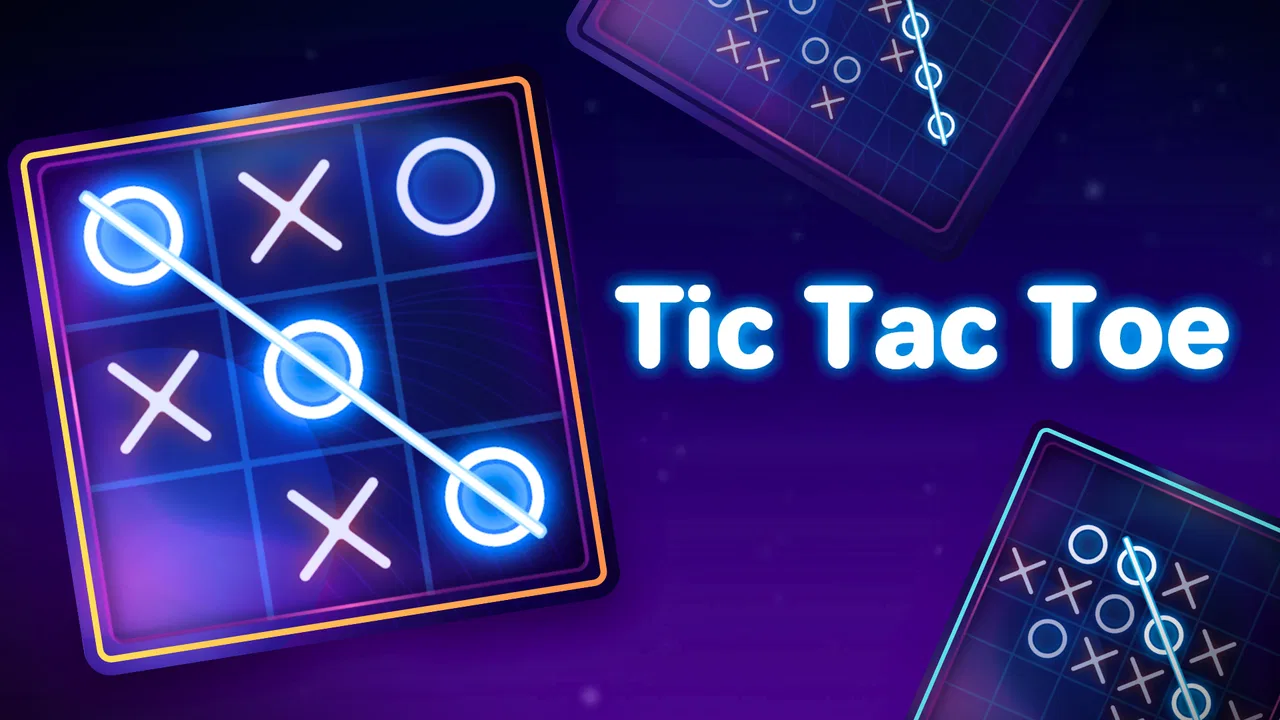
Tic Tac Toe 2 Player: XO Game
- 4.4
- Rating
- 100.00M
- Installs
- Free
- Price
 Analysis by App-foxy
I keep coming back to simple games when I have only a few minutes to spare, and Tic Tac Toe 2 Player: XO Game fits that moment unusually well. It takes the familiar three-by-three puzzle and makes it immediately playable, with no complicated rules to learn and no long tutorial standing between me and the first move. I can open it, start a round, and understand the situation at a glance.
That simplicity is both its greatest strength and its main limitation. This is not a puzzle game designed to surprise me with new mechanics or a long progression system. It is a quick head-to-head activity built around placing Xs and Os, reading the board, and trying to outthink another person. When I want a short, low-pressure match, that focus works. When I want discovery, depth, or a substantial solo challenge, I start looking elsewhere.
Why the first round feels so immediate
The game comes from Onetap Global and sits firmly in the casual puzzle space. Its appeal is easy to understand: two players share the same basic objective, and every move is visible. There is no need to remember a large set of rules, manage an inventory, or wait through a lengthy opening sequence. The familiar format makes it suitable for a quick round with a friend, a family member, or someone sitting next to me.
You May Also Like

 Blood Strike: 2.5 Anniversary
Blood Strike’s Loadouts Turn Every Drop Into a Tactical Gamble
A close look at Blood Strike’s custom loadouts: how fast access to signature weapons reshapes its battle royale rhythm, rewards preparation, and narrows the gap between fights.

 Pandora - Music & Podcasts
Pandora’s Music Is Easy to Start, but Harder to Recover
Pandora’s strength is its low-effort path from a seed to a station. Its weak spot is how much confidence it asks you to place in connection, setup, and quiet recovery.

 8 Ball Pool
 Is Built on Rivalries, Rematches, and Routine
A close look at the rivalries, rematches, shared routines, and unanswered safety questions that turn a quick pool match into a persistent mobile community.

 Samsung Music
’s Quiet Strength Is Playing What You Already Own
Its reach comes less from spectacle than from dependable access to a personal library. That simplicity is both the app’s strongest retention engine and its ceiling.

 AccuWeather: Weather Radar
AccuWeather Review: A Quick, Clear Forecast for Everyday Decisions
For everyday plans, the best forecast is the one you can understand quickly. AccuWeather makes rain timing, radar, and local conditions easy to act on, with a few trade-offs.

 Hill Climb Racing
Why Hill Climb Racing Still Turns Crashes Into One More Run
A tiny car, a bumpy hill and one more upgrade: Hill Climb Racing keeps resurfacing because its simple chaos makes every near-miss feel personal.
More From Our News Desk



I especially like that the board creates a clear decision every time. A move can be defensive, offensive, or both. I may block an obvious line, create a threat in another direction, or place a mark in a position that forces the other player to respond. Even though the board is small, the attention required is real. The best moments come when both players notice the same threat and begin planning one step ahead.
The short description presents it simply as Tic Tac Toe, and that is an accurate expectation. The experience does not ask me to invest in a fictional world or understand a complicated interface. It is a direct digital version of a game many people already know. That makes it particularly useful as a pick-up-and-play puzzle, rather than something I would install for a long evening of progression.
Because the rules are so familiar, the game is also easy to hand to someone who has never used it before. A child can understand the goal quickly, while an adult can begin playing without reading instructions. The Everyone content rating supports that broad audience. I would still treat it as a shared activity rather than assume that every child will enjoy it equally, since the fun depends heavily on having an interested opponent nearby.
The best rhythm is built around very short matches
My favorite way to use the game is in small gaps: while waiting for a drink, during a quiet break, or when I want a little interaction without committing to a full gaming session. A round has a natural beginning and ending, so I do not feel trapped in a long match. That matters when my attention is divided or I know I may need to put the phone down at any moment.
The rhythm is pleasantly conversational. One person makes a move, the other reacts, and the board gradually becomes more important than the rest of the screen. There is enough time to think, but not so much that the game loses its energy. With a relaxed opponent, a round can feel like a quick mental exchange. With a competitive friend, even a familiar position can create a surprising amount of tension.
A useful habit is to avoid tapping automatically in the first open space I see. I get more from the game when I pause briefly and check three things: whether the opponent is building a line, whether my own move creates a future threat, and whether I am giving away a better position. That tiny routine turns the experience from random placement into a compact exercise in attention.
Another practical tip is to agree on a small series of rounds instead of judging the game from a single result. One lucky opening can decide a match, especially when both players know the basics. A short series gives each person time to adjust and makes the activity feel less dependent on one mistake. This is one of the few ways to add structure without pretending the game has a large progression system.
The game is free, which makes it easy to try for this specific use. I do not need to justify a purchase before discovering whether the format suits my household or my group of friends. Its current version is 0.49, and it runs on Android devices using version 7.0 or later. For someone with an older compatible phone, that broad system requirement can make it a practical choice for a shared device.
What happens when real life interrupts
Short games are only truly convenient if they tolerate interruption. In my experience, this title is best approached as a round-based activity that I start when I expect to have a moment of attention, rather than as something I leave running while multitasking. The board is simple enough to understand again after a brief distraction, but a missed move or an opponent’s response can still change the position immediately.
That creates an important distinction. If I am interrupted between turns, returning is easy because the board communicates the current state clearly. I can count the marks, identify open lines, and continue planning. If I am interrupted while the other person is actively playing, I may need to ask what happened or reconstruct the latest move. The game is readable, but it cannot remove the need for both players to stay aware of the exchange.
For that reason, I find it more comfortable in situations where the two players are physically present and can simply pass the device or take turns openly. It works well at a kitchen table or during a waiting period. It is less suitable when I want a game that can quietly manage interruptions, save a complicated position, or let me return hours later to a deep campaign.
This is also where the game’s lack of complexity becomes useful. If I have to stop, I am not losing a carefully developed character, a long puzzle chain, or a large amount of progress. A disrupted round is easy to abandon and restart. That low emotional cost is a genuine advantage for people who use their phones in fragmented moments.
I would not choose it as my main option for a long commute if I expect unreliable attention. A more substantial puzzle with clear saved progress may serve that situation better. Here, the pleasure comes from being present for a small contest. The game does not need to be demanding, but it does need both players to engage with the board while the round is happening.
Replay value depends on the person across from me
The central question is whether basic Tic Tac Toe can hold my attention after the novelty disappears. The honest answer is that replay value depends much more on the opponent than on the game itself. Against someone who plays randomly, I may understand the outcome quickly and lose interest. Against someone who watches for traps and blocks carefully, the same small board remains worthwhile for a while.
That makes this a social replay game rather than a content-heavy one. I return because I want another contest with a particular person, not because I am unlocking a new chapter or collecting rewards. It is a good fit for siblings, partners, parents and children, or friends who enjoy quick rematches. It is a weaker fit for a player who expects a steady stream of new challenges from one installation.
The board also teaches a useful lesson about repetition: once both players know the basic responses, many rounds can end in a draw or feel decided by a small error. That is not a flaw in the app specifically; it is part of the structure of Tic Tac Toe. Still, it means the game should be judged as a compact social pastime, not as an endlessly deep strategy title.
One way I keep it fresh is to change the purpose of each round. In one match I may focus on avoiding careless openings. In another, I may try to create two possible winning lines at once. With a younger player, I can slow down and explain why a block matters. With an experienced friend, I can treat each move as a test of patience. These self-imposed goals add variety without requiring features that the game does not claim to provide.
I also recommend using it as a conversation starter rather than letting it become a silent battle. Because each turn is quick, players can talk between moves without losing the thread. That makes it more enjoyable in a group setting than many solo puzzle apps, even though the actual game board is extremely small.
How it compares with familiar alternatives
Compared with drawing Tic Tac Toe on paper, the app is more convenient when I already have a phone in hand. The board is always available, and I do not need a pen or a flat surface. Paper still has an advantage when I want to play several boards at once, customize the rules myself, or avoid screen time entirely. The digital version wins on readiness, not on depth.
Compared with a larger puzzle game, this title is much easier to understand and much faster to finish. A match-three game, logic puzzle collection, or word game may offer more variety and stronger solo replay value. Those alternatives are better when I want a personal challenge that can occupy me for a longer period. This game is better when the point is a direct contest between two people.
Compared with a full board-game app, it is also less demanding. I do not have to learn several systems or track a long-term strategy. That makes it approachable, but it also means there is less to explore after I have mastered the basic decisions. Players searching for ranked competition, detailed statistics, or a larger range of modes should probably choose a broader game instead.
The strongest comparison is with the traditional version played face to face. The app preserves the essential decision-making, but the phone adds a layer of convenience and removes the need to draw a fresh grid. Whether that trade-off is worthwhile depends on the setting. For a spontaneous round, I prefer the app. For a nostalgic family game night, paper can feel more natural.
Who will enjoy it, and who should skip it
I would recommend it to anyone who wants a free, uncomplicated two-player puzzle for brief sessions. It is especially suitable for people who dislike tutorials, complicated controls, and games that demand a long uninterrupted block of time. The Everyone rating also makes it broadly approachable for families, provided the players enjoy taking turns and accept that some rounds will end quickly.
It is a sensible choice for an older compatible Android phone used as a shared device. The minimum operating system is Android 7.0, so it does not require a recent handset. That can be helpful when I want to keep an inexpensive or spare phone available for casual play without turning it into a demanding gaming machine.
I would skip it if I mainly play alone and expect a strong computer opponent, a campaign, or a deep progression loop. I would also look elsewhere if I need a game that rewards long-term mastery with varied boards and changing objectives. The compact format is honest about what it offers: quick X-and-O matches, not a broad puzzle collection.
It may also disappoint players who need a highly polished competitive environment. The game’s appeal is its immediate simplicity, so I would not install it expecting the level of structure found in dedicated strategy platforms. For casual use, that restraint is part of the charm. For serious competition, it is likely to feel too small.
My practical verdict after using it
The game succeeds when I treat it as a pocket-sized social activity. I can open it for a fast round, hand the phone to another player, and concentrate on a board that is easy to read. It handles the most important part of the experience well: getting two people into a match without friction.
Its limitations are equally clear. The familiar rules mean the experience can become repetitive, and the replay value relies on finding an opponent who makes thoughtful decisions. It is not the right tool for filling a long solo session, and it does not replace a richer puzzle game when I want variety or progression.
The large audience reflects how accessible the format is: the game has an average rating of 4.4 from around 130 thousand ratings and has passed 100 million installs. Those figures do not change the basic nature of the experience, but they do match my impression that this is designed for broad, casual use rather than a narrow group of specialist players.
For me, the best use case is simple: keep it available for a spare minute, invite someone nearby to play a few rounds, and stop when the conversation or the day moves on. Its real strength is interruption-friendly simplicity, not endless content. If that is what I want, I think it is worth trying. If I want a solo puzzle with lasting variety, I would choose a different category of game instead.
On balance, I recommend Tic Tac Toe 2 Player: XO Game as a straightforward free puzzle for quick shared play. Onetap Global has kept the focus narrow, and that focus works as long as I judge it by immediate pleasure, clear turns, and easy rematches. It is a small game, but in the right moment, that is exactly why it works.
FAQs for Tic Tac Toe 2 Player: XO Game
01What are the main features of Tic Tac Toe 2 Player: XO Game?
Tic Tac Toe 2 Player: XO Game offers a classic multiplayer experience where you can challenge friends or play against the AI. The game includes various difficulty levels, customizable board sizes, and vibrant graphics. It also features a simple, user-friendly interface that makes it accessible for all ages.
02Is Tic Tac Toe 2 Player: XO Game free to download and play?
Yes, Tic Tac Toe 2 Player: XO Game is free to download and play. However, it may include optional in-app purchases and ads to enhance the gaming experience. These purchases might offer additional features or remove advertisements for uninterrupted gameplay.
03Can I play Tic Tac Toe 2 Player: XO Game offline?
Absolutely! Tic Tac Toe 2 Player: XO Game can be played offline, allowing you to enjoy the game without an internet connection. This is perfect for on-the-go gaming or when you’re in areas with limited connectivity. You can play against the AI or another player on the same device.
04Is Tic Tac Toe 2 Player: XO Game suitable for children?
Yes, Tic Tac Toe 2 Player: XO Game is suitable for children. Its simple rules and friendly design make it an excellent choice for young players. The game encourages strategic thinking and can be a fun educational tool to help children improve their problem-solving skills.
05How can I change the difficulty level in Tic Tac Toe 2 Player: XO Game?
To change the difficulty level in Tic Tac Toe 2 Player: XO Game, navigate to the settings menu within the app. You can select from multiple difficulty levels, ranging from easy to hard, allowing you to tailor the challenge to your skill level. This feature is great for both beginners and experienced players.
Pros
- Simple and intuitive interface.
- No internet required for multiplayer.
- Quick and engaging matches.
- Suitable for all ages.
- Lightweight and fast download.
Cons
- Limited to two players only.
- Lacks advanced AI difficulty levels.
- No customization options.
- Ads can be intrusive.
- No online multiplayer mode.

Tic Tac Toe 2 Player: XO Game
Gallery